
How Does Underfloor Heating Work?
A Complete Guide for Self-Builders, Renovators & Extension Projects
Imagine stepping onto a warm floor on a chilly morning and feeling a luxurious heat spreading throughout your home. That’s the transformative experience of underfloor heating (UFH), and it’s why it’s fast becoming a must-have for self-builders, renovators, and anyone adding an extension. But how does underfloor heating work?
At Buxton Flow Screeds, we’ve been experts in UFH installation for over two decades. In this blog, we’ll guide you through everything you need to know about this increasingly popular heating system.
UFH not only provides that wonderful underfoot warmth; it’s also offers a super-efficient way to heat your home. Why? Because it creates a consistent, comfortable temperature in every corner of your room, eliminating cold spots and chilly drafts.
Ready to discover how underfloor heating works and how it can enhance your home? Let’s begin!
Turn Your Floor into a Giant Radiator
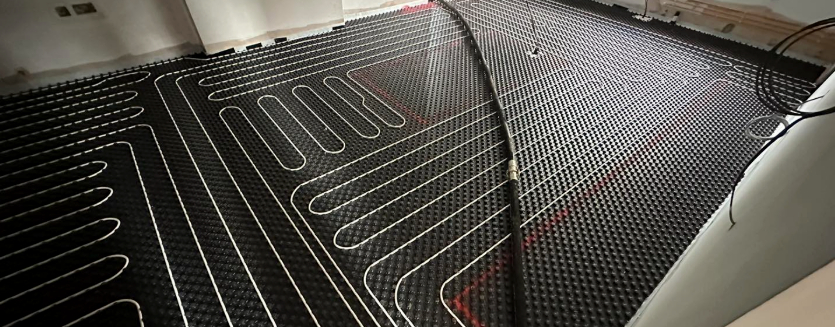
Maybe “giant radiator” isn’t the most elegant of phrases, but it’s a clear and immediate description of what underfloor heating does! UFH involves installing a network of pipes or wires beneath your floor surface. These pipes or wires distribute heat across the surface, transforming your entire floor into an efficient heating system.
But here’s the fascinating thing; UFH doesn’t just heat the air in a room like a traditional radiator. Instead, it gently warms your home from the ground up, using radiant heat (like the sun). This means:
- Ultimate comfort – No more cold feet or drafty corners! You get a consistent, comfortable temperature throughout the room.
- Less strain on your boiler – UFH operates at a lower temperature than radiators (around 40°C compared to 65°C), making it a more energy-efficient choice.
- Perfect partner for renewables – UFH works brilliantly with renewable energy sources like heat pumps, maximising their efficiency.
Another way to imagine it is to see your floor a giant heater, radiating warmth upwards and creating a cosy, inviting atmosphere.
Wet vs. Electric – Choosing the Right UFH System
If you’re sold on the idea of underfloor heating, the next step is to decide whether a wet or electric UFH system would suit you best. Here’s a broad brushstrokes guide:
1. Wet Underfloor Heating

This is the classic option. Wet UFH uses a network of pipes sunk into floor screed. These pipes carry warm water, usually heated by a boiler (though heat pumps are particularly well suited to this heating system!).
Why choose wet UFH?
- Efficiency – It’s generally more energy-efficient than electric UFH, especially for larger areas.
- Even heat distribution – Provides a consistent temperature throughout your space.
- Ideal for new builds and extensions – It’s best suited for projects where you’re starting with a blank canvas.
2. Electric Underfloor Heating
This option uses electric cables to generate heat beneath your floor.
Why choose electric UFH?
- Easier installation – It’s often quicker and less disruptive to install than wet UFH.
- Cost-effective for smaller areas – It can be a budget-friendly choice for single rooms or smaller projects.
Making the Decision
While electric UFH might seem appealing for its ease of installation, it’s important to consider the long-term running costs, which can be higher than wet systems.
Laying the Foundation – Wet UFH Installation
Now we’ve introduced the different types of UFH, we’ll take a closer look at how wet underfloor heating is installed. Its key components are insulation, water pipes, and liquid screed.
Here’s a simple guide to the process:
- Insulation – First, a layer of insulation is laid down. This acts like a barrier, preventing your precious heat from escaping downwards.
- Pipes – Next, the underfloor heating pipes are carefully arranged on top of the insulation. These pipes are typically laid in rows, evenly spaced to ensure a consistent temperature across the floor.
- Screed – Now, liquid screed is poured over the pipes, encasing them in a smooth, level layer. This screed plays a vital role in distributing the heat evenly and providing a solid base for your chosen floor finish.
- Drying and Finishing – The screed needs time to dry and cure properly. This usually takes around four weeks, but it’s always best to follow the manufacturer’s recommendations. Once the screed is fully dry, you can install your chosen floor covering, whether it’s tiles, wood, or carpet.
Why is screed important?
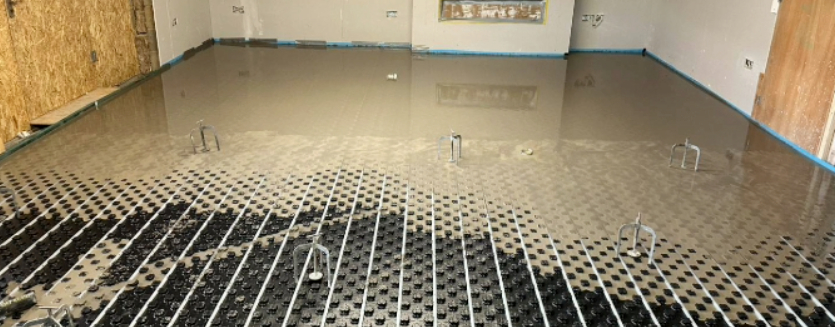
Choosing the right screed is crucial for a successful UFH installation.
Liquid screed flows around the water pipes, completely filling the spaces around the pipes and expelling the air. This means that the heat distributes across the surface area more evenly, resulting in greater thermal efficiency. In other words, liquid screed acts as a heat reservoir, absorbing heat from the pipes and radiating it evenly across the floor.
Additionally, screed provides a strong, stable base for your floor finish and it helps to protect your floor from moisture damage.
UFH – Weighing Up the Positives and Negatives
No heating system is 100% perfect. But the team at Buxton Flow Screeds thinks underfloor heating comes fairly close! To help you decide whether it’s right for you, let’s take a look at the fantastic benefits and downsides to consider before taking the plunge.
Why We Love UFH:
- No more cold spots! – UFH provides a lovely, even heat distribution, eradicating the chilly corners that radiators often miss.
- Energy efficiency – Because UFH operates at a lower temperature than radiators, it’s both cheaper to run, and the sustainable option.
- Design freedom – UFH frees up valuable wall space and gives you more flexibility in your room layout.
- Enhanced safety – There are no hot surfaces to contend with, making UFH a safer option for homes with young children.
- Improved air quality – UFH systems circulate less dust and allergens than radiators, which can be a real plus for allergy sufferers.
Things to Keep in Mind:
- Installation cost – UFH generally has a higher upfront cost than a traditional radiator system. However, the long-term energy savings are very likely to offset this initial investment.
- Installation time – Wet UFH, in particular, can take a longer than radiators to install, as it involves screeding and drying times.
- Floor height – If you’re retrofitting UFH, you’ll need to consider the added height it will create. This might involve some adjustments to doorways or existing flooring. Alternatively, you may wish to use ultra-thin screed designed to tackle this particular problem.
The Verdict?
While there are a few considerations, the benefits of UFH do outweigh the drawbacks, especially for new builds and extensions. It’s an investment in comfort, efficiency, and design freedom that can transform your home and your lifestyle.
Ready to Enjoy the Toasty Warmth?
As you can see, underfloor heating offers a fantastic combination of comfort, efficiency, and design flexibility. If you’re considering UFH for your project, partnering with experienced professionals is key.
At Buxton Flow Screeds, we’ve been supplying and installing high-quality liquid screeds for underfloor heating systems for over 20 years. We pride ourselves on using premium, UK-sourced materials and employing skilled local specialists to ensure your project runs smoothly.
Want to learn more about how underfloor heating can transform your home? Give our friendly team a call – We’re happy to answer your questions and provide expert advice. Reach us at 020 3369 3396 or 07590 625100.


