
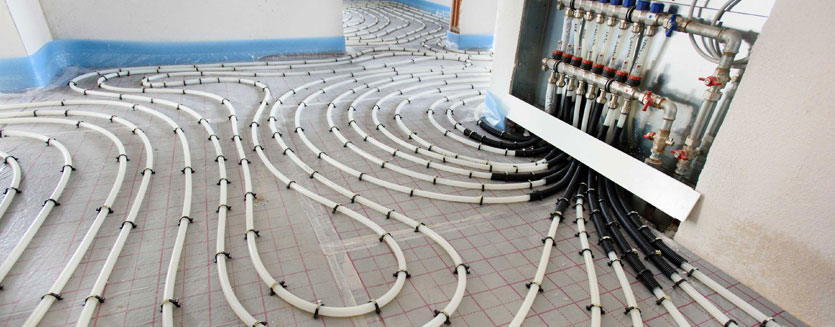
Why You Need Screed For Your Underfloor Heating System
A Guide to Underfloor Heating and Screed
Underfloor heating (UFH) has become the go-to choice for modern homes, offering a luxurious warmth that radiates evenly throughout your rooms. The allure of radiant heat and an energy-efficient system is hugely desirable for new builds, self-builds and renovations.
In this blog we’ll be looking at why you need screed for your underfloor heating system. It may not be the most glamorous aspect of your project, but it’s how the heat travels to every corner of your room. At Buxton Flow Screeds, we’ve been installing UFH systems for over a decade, and we understand the vital role screed plays in ensuring your system delivers optimal warmth and efficiency for years to come.
In this guide, we’ll consider screed’s function, the different types available, and how to choose the right screed for your project.
Why You Need Screed for Your Underfloor Heating System
Screed might seem like just another layer in your floor construction, but it’s far more than that when it comes to underfloor heating. In fact, it’s absolutely vital for both wet and electric UFH systems. Here’s why:
- Heat Transfer and Distribution – Screed acts as a giant heat reservoir. It absorbs the heat generated by your UFH pipes or cables and then radiates it evenly across the floor surface. This ensures a consistent temperature throughout your room, eliminating the cold spots you can get with radiators.
- Thermal Mass – Screed has excellent thermal mass, meaning it can store heat energy and release it gradually. This provides a more stable and comfortable temperature, reducing fluctuations and maintaining a cosy feel even after the heating has switched off.
- Protection and Support – Screed forms a protective layer around your UFH pipes or cables, shielding them from damage during installation and throughout their lifespan. It also provides a solid and stable base for your chosen floor finish, whether it’s tiles, wood, or carpet.
- Efficiency Booster – By efficiently transferring and distributing heat, screed helps your UFH system operate at its best. This can lead to improved energy efficiency and lower running costs in the long run.
What Makes Screed Such a Good Heat Distributor?
Screed’s effectiveness in distributing heat comes down to its composition and properties. Traditional sand and cement screeds have decent thermal conductivity, allowing them to transfer heat relatively well. However, modern liquid screeds often contain additives that enhance their thermal conductivity even further.

Specialist thermal screeds are designed to provide a much faster response to thermostat changes, for example, offering diffusivity that’s up to 80% faster than cement screeds.
Choosing the Right Screed for Your Underfloor Heating System
Choosing your underfloor heating screed will come down to specific factors like the size of your project, your budget, and your floor finish. The most common types of screed used with UFH are:
1. Traditional Sand and Cement Screed:
This is the classic screed option, made from a mixture of sand, cement, and water. It’s widely available, cost-effective, and suitable for most UFH applications.
- Pros – Affordable, readily available, good thermal conductivity.
- Cons – Longer drying times (can delay project completion), may require more skilled labour for installation, can be prone to cracking if not mixed and laid correctly.
Traditional screed is often preferred for smaller projects or where budget is a primary concern.
2. Liquid Screed (Flowing Screed):
Liquid screed, also known as self-levelling screed, is an option that’s gaining popularity for UFH installations. It’s a free-flowing mixture delivered ready-mixed and pumped directly onto your floor.
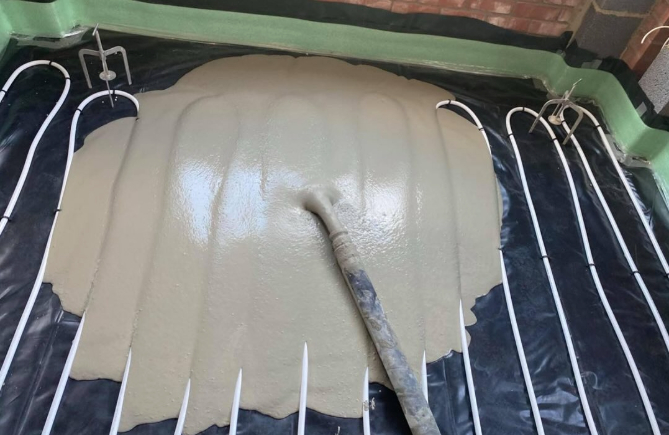
- Pros – Fast and efficient installation, covers large areas quickly, excellent thermal conductivity, self-levelling properties create a smooth surface, dries faster than traditional screed.
- Cons – More expensive than traditional screed, may require specialist equipment for installation.
Liquid screed is a great choice for larger projects, where speed and efficiency are important, or when a perfectly smooth surface is required for your floor finish.
3. Other Screed Options:
While traditional and liquid screeds are the most common choices, there are other specialist screeds available:
- Fast-drying screeds – These contain additives that accelerate the drying process, allowing you to complete the process more quickly.
- Reinforced screeds – The use of fibres or other materials to increase their strength and durability, makes them suitable for high-traffic areas.
- Recycled aggregate screeds – A more sustainable option, incorporating recycled materials.
Need Help Making the Decision?
The best way to choose the right screed is to start with your specific needs and budget. If you’re uncertain, talking to a UFH specialist, like Buxton Flow Screeds, can help you make an informed decision. We can assess your project and recommend the most suitable screed type for optimal performance and efficiency.
Tips for Successful Screeding with Underfloor Heating
Getting the screed right is crucial for a successful underfloor heating installation. Here are some essential tips to ensure your UFH system performs at its best:
Choose the Right Screed and Depth:
Different screeds have different properties. Liquid screeds, for instance, offer faster drying times and excellent heat distribution, so choose the one that’s right for you.
The depth of your screed has an impact on heat-up times and heat retention. A typical depth for UFH screed is around 65-75mm, but this can vary depending on the specific system and floor construction. Deeper screed takes longer to heat up but retains heat for longer, providing a more stable temperature.
Prioritise Insulation:
Effective insulation beneath your UFH pipes is essential. It prevents heat loss downwards, ensuring most of the heat is directed upwards into your living space. This increases the efficiency of your system and saves you money on energy bills.
Incorporate Expansion Joints:
Screed expands and contracts with temperature changes. The use of expansion joints prevents cracking and ensures the screed remains stable over time.
Ensure Proper Pipe Positioning and Protection:
Before pouring the screed, make sure your UFH pipes or cables are securely fixed in place and free from any potential damage. A protective membrane can be used to further shield the pipes.
Allow for Proper Curing:
Patience is essential once the screed is laid. Allow it to cure properly before turning on your UFH system. This typically takes several weeks. Rushing the process can lead to cracking and compromise the screed’s performance.
Commissioning Your UFH System:
Once the screed is cured, take the time to commission your UFH system correctly. This involves gradually increasing the water temperature over several days to prevent thermal shock and ensure the screed dries evenly.
For guaranteed results, work with experienced UFH installers like Buxton Flow Screeds. We have the expertise to ensure your screed is installed correctly, maximising the efficiency and longevity of your underfloor heating system.
Have questions about screed for your underfloor heating project? Don’t hesitate to call the experts at Buxton Flow Screeds. We’re happy to provide advice and guidance to ensure your UFH system is a success. Get in touch with us today – 020 3369 3396 / 07590 625100


