

How Long Does Underfloor Heating Take to Warm Up?
Understanding Underfloor Heating Warm-Up Times
Underfloor heating typically takes between 30 minutes to a few hours to warm up. The precise timing is dependent on your flooring finish, the thermal conductivity of the screed used for installation, the room’s insulation, and the system’s starting temperature.
While the impact isn’t instant, like you get from radiators, underfloor heating provides consistent and even warmth once it’s reached the temperature you want, and it retains heat for longer. Both these factors make it a cost-effective way to heat your house.
The Buxton Flow Screeds team helps customers to create warm and comfortable homes with underfloor heating. As UFH installers we regularly get asked “How long will it take for my underfloor heating to warm up?” That’s why we’ve put together this blog which explains what influences warm-up times, so you that you know what to expect and how to plan for underfloor heating that works effectively.
The Science Behind Underfloor Heating Warm-Up
Wet underfloor heating systems use warm water circulating through pipes which are embedded in a screed subfloor. The operational principle here is thermal conductivity.
Heat transfers from the pipes to the screed, which then radiates warmth evenly throughout the room. The heat energy has to distribute laterally (across the floor) and vertically (upwards).
This is why the system takes time to reach its target temperature. A medium-sized room, starting from a cold state, might take up to three hours to fully warm up.
Want Faster Warm-Up? Here’s What Matters
There are a number of factors weighing on how quickly your underfloor heating system warms up. Understanding what these are, and how to manage them, helps to reduce the warm-up wait for your family.
At Buxton Flow Screeds, we use thermal liquid screed for underfloor heating installations. It’s designed to provide faster warm-up times – up to 80% faster than cement screeds. Like all liquid screeds its ability to hug the heating pipes during installation, ensures efficient heat distribution across the floor.
1.Insulation – Your Home’s Warm Blanket
Effective insulation is central to efficient underfloor heating. Without it, heat can be lost downwards into the subfloor or upwards through poorly insulated roofs, walls, windows, and doors, which increases both your warm-up times and your running costs.
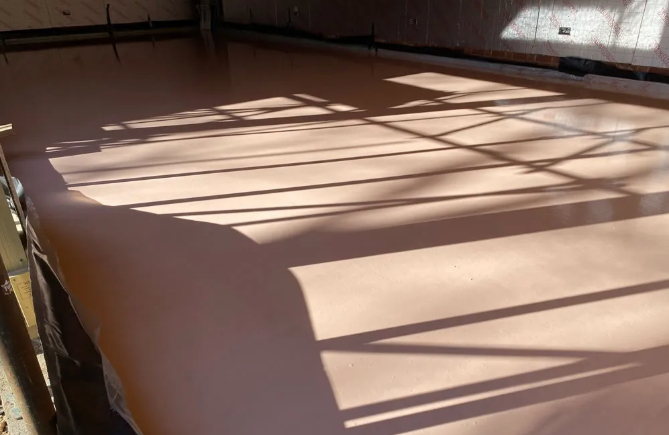
Insulation boards should be installed beneath the heating pipes and screed in order to prevent downward heat loss. We always recommend and install appropriate insulation to guarantee efficiency and reduce running costs.
2. Floor Coverings – Your Flooring Choices
The type of flooring you choose also plays a big role in warm-up times. This is because different materials conduct heat at different rates:
- Stone – Stone is an excellent heat conductor, making it ideal for underfloor heating. Thicker tiles may take slightly longer, but you can generally expect warm floors within 15-30 minutes.
- Wood – Dense hardwoods like oak take longer to heat up. Lighter hardwoods and pine warm up more quickly, typically within 30-60 minutes.
- Carpets – These are a poor heat conductor and can take over an hour to warm up.
3. Sealing the Gaps – Reducing Heat Loss
Drafts from poorly sealed windows and doors, as well as inadequate roof or wall insulation, play their part in impacting warm-up times and heating efficiency. Proper insulation will not only improve your underfloor heating’s efficiency but also lower your energy bills.
Getting the Most from Your Underfloor Heating
One of the best ways to manage your underfloor heating is to maintain a consistent, lower temperature rather than repeatedly turning it on and off. This keeps the screed and flooring at a stable temperature, preventing them from cooling down completely. Here’s why this approach is so effective:
- Faster Warm-Up Times – Because the floor is already warm, it takes much less time for the system to reach your desired temperature when you adjust the thermostat.
- Increased Energy Efficiency and Cost Savings – It might feel a bit odd to keep the heating on, but maintaining a steady temperature actually uses less energy overall. Why? Because reheating a cold floor takes a much bigger energy boost than maintaining an already warm one.
- Greater Comfort – A consistent temperature keeps your home comfortable heating at all times, so you’ll feel like you’re experiencing the full benefit of your underfloor heating.
Smart thermostats give you control over temperatures and schedules. You can set lower temperatures for times when rooms are unoccupied or overnight and raise the heating level when needed.
Zoning your underfloor heating is another good way to use your unfloor heating efficiently. By creating separate heating zones, you can tailor the heating to suit the usage. So, frequently used rooms like living rooms and kitchens can be prioritised for faster heating, while less used rooms, like guest bedrooms, can be kept at a lower temperature and heated only when necessary.
Buxton Flow Screeds Specialists
Switching to underfloor heating can take some getting used to, but the results are well worth it, and Buxton Flow Screeds is here to simplify the process.
Whether you’re unsure about the best system for your home, need advice on underfloor heating installation, or you have questions about managing your heating efficiently, our friendly team can provide the answers.
We provide expert installation of underfloor heating systems across the UK. Contact us today for a free quote – 020 3369 3396/07590 625100


