
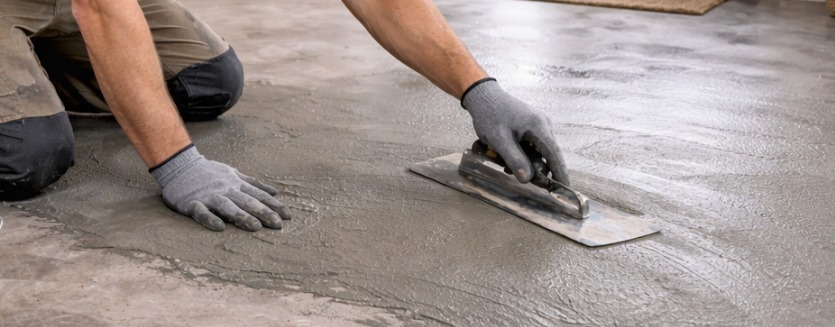
Is Microcement Sustainable?
Is Microcement The Best Low-Impact Choice For Sustainable Builds?
In the building trade, “sustainable” is a word that gets used loosely, but for serious renovators and professional builders, you need more than just generic claims. You need to know that your materials are durable and won’t harm the planet. So, is microcement sustainable?
At Buxton Flow Screeds, we know that finding accurate data can be difficult. We’ve written this blog to provide genuine credentials and the technical detail that professionals need to make an informed, responsible choice for their next project.
As a trusted name in the industry for over two decades, Buxton Flow Screeds has a reputation built on quality and precision. Now, as an approved Forcrete installer, we are combining our specialism in liquid screed with sustainable microcement. What we offer here is a practical, installer-led perspective on why this material is a reliable choice for your next eco-focused building project.
Breathe Easier With Low VOC Microcement Finishes
Indoor air quality is a vital component in any sustainability plan. That ‘new floor smell’? That’s a floor finish releasing chemicals into the air. These VOCs (Volatile Organic Compounds) can continue to produce toxins for years. Because Forcrete is engineered to be low emission, it’s a much safer bet for modern homes.
- Safety for families – Minimal off-gassing means your indoor air is cleaner from day one.
- The Passivhaus standard – It’s an ideal choice for airtight, energy-efficient builds.
- Installer health – The Buxton team appreciates working with microcement because it doesn’t give off harsh chemical fumes in enclosed spaces.
Why Durability is so Important to Sustainability
The most sustainable material is the one you won’t be ripping out in ten years’ time. We’ve seen enough “fast fashion” flooring end up in skips to know that longevity is the key to a green build. Microcement is built to last, making it a responsible choice that builds for the future.
- Stain and water resistance – Unlike timber, microcement won’t warp or rot over time.
- Structural integrity – It doesn’t crack or peel when applied correctly by a specialist.
- Waste reduction – A “forever floor” means decades of avoiding the landfill.
The Sustainable Logic Of Upcycling Floors
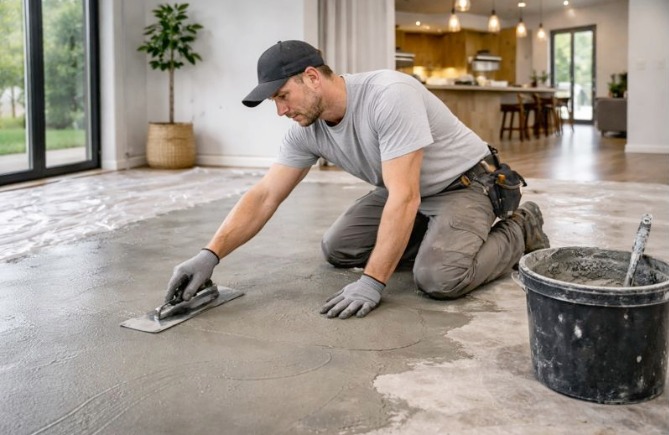
Why throw away a perfectly good sub-floor? Microcement gives you the opportunity to “upcycle” what’s already there. Whether it’s old screed or tiles, you can transform the space without the environmental cost of ripping out the old floor and starting from scratch.
- Precision application – A thin 3mm layer is all it takes to completely redesign a room.
- Minimalist footprint – It uses significantly fewer raw minerals than traditional concrete floors.
- Smart renovation – Microcement allows you to reduce the total material impact of your project while still getting a professional, modern finish.
A Transparent Look At The Trade-Offs
While we advocate for the benefits of microcement, we believe in being 100% straight with you. No building material is perfect. The “cement” in microcement is, by nature, an energy-intensive product to manufacture. The production of traditional Portland cement involves high-heat kilns that contribute to carbon emissions.
Additionally, to give microcement its incredible flexibility and “stick,” it is mixed with liquid polymers (resins). These resins are often derived from petroleum, which is a non-renewable resource that we have to weigh against the material’s long-term benefits.
Balancing up the carbon cost, you need to set it against the “life cycle” of the floor. The fact that you only use a 3mm layer helps offset the volume of raw materials compared to a standard 100mm concrete slab.
We always explain to our clients that while the raw ingredients have an environmental footprint, the durability and lack of future replacement often make it a “net positive” over thirty years. It’s about choosing a material that costs a bit more in carbon today to save a lot of waste tomorrow.
Why Simple Cleaning Is A Sustainability Win
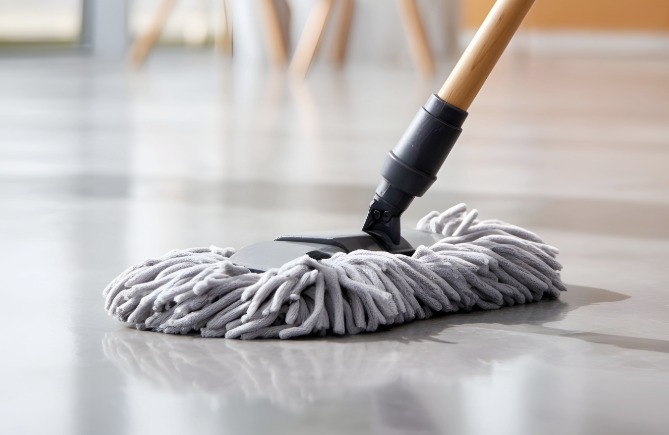
Sustainability doesn’t stop once the floor is dry – it’s a long-term commitment. One of the hidden environmental benefits of microcement is how little it asks of you. Unlike carpets that trap dust and require heavy vacuuming, or stone that might need specialized chemical treatments, microcement is easy to maintain.
A damp mop with a natural cleaner, used regularly, is all you need, making it one of the most eco-efficient surfaces to live with.
Expert Guidance For Your Sustainable Build
Deciding on the right materials for an eco-focused project is never a simple “yes” or “no” answer. As we’ve seen, microcement has its trade-offs, but its longevity, low VOCs, and ability to reduce demolition waste make it a serious contender for any serious renovator.
If you’re ready to see how a Forcrete microcement finish could work for your home or next project, let’s talk. With over two decades of experience in the liquid screed and flooring industry, we provide the technical depth and advice you need to build with confidence.
Contact our team today for a direct, installer-to-installer consultation or a detailed quote for your project – 020 3369 3396/ 07590 625100


