

How to Apply Microcement Over Tiles
Can I Apply Microcement Over My Existing Tiles?
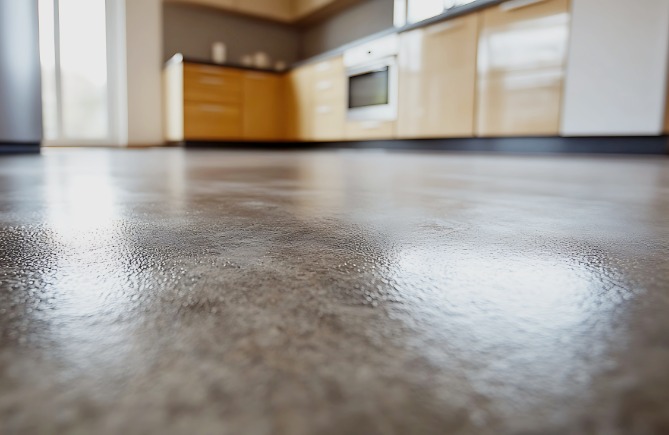
Wondering how to apply microcement over tiles? The system itself gives you a head start. Microcement creates a good looking, grout-free surface that can completely transform a room without having to go through the mess of tile removal. Not only that, with a huge range of colours and textures, from polished concrete to soft, natural stone, you get to design a space that’s unique.
With over two decades of experience, Buxton Flow Screeds is an approved installer and supplier of Forcrete microcement. We’ve written this guide to provide you with a clear, breakdown of every step in the installation process.
Why Forcrete is the Right Choice for Kitchens, Bathrooms and Wet Rooms
In a kitchen, bathroom or wet room you need a surface that is good looking and tough. One of the main appeals of microcement is its seamless, grout-free finish. This continuous surface is great to look at, but it’s also a practical choice. It means you can wipe down an entire wall or floor without having to scrub dirty tile joints.
When there’s water involved, though, you also need be sure that the system you choose is 100% waterproof. This is the important differentiator with Forcrete.
Most microcement systems are not waterproof. They are porous layers which are protected by a polyurethane top coat.
The Forcrete system we use has integral waterproofing. Its waterproofing capabilities are built directly into the structure of the product itself; they’re not added after application. This makes it more durable and secure for any high-moisture or high-use area. It’s the difference between a water-resistant coating and a waterproof system.
The Professional Method – Applying Microcement Over Tiles
The application of microcement is a detailed process where preparation and precision are everything. It’s certainly possible as an advanced DIY project, but it should be noted that it’s very different from tiling. The skill lies in the hand-trowelled application, where every movement contributes to the final, seamless finish. The following steps will demonstrate the work involved. For a guaranteed flawless, waterproof result, we always recommend using an approved Forcrete installer.
Step 1. Prepare the Substrate – The first task is to clean the tiles thoroughly. After cleaning, the entire surface area should be sanded with coarse-grit sandpaper to remove the gloss. Any loose tiles must be fixed or removed at this stage.
Step 2. Apply Primer – Roll or brush on a specialist tile primer in a single, even coat. Take care not to let it pool. Allow it to dry completely, according to the manufacturer’s instructions, before the next step.
Step 3. Level the Grout Joints – Mix a small batch of the base coat microcement. Using a flat trowel pull the material tightly across the grout joints until they are 100% level with the face of the tiles.
Step 4. Embed the Mesh – Apply the first full waterproof Forcrete Base coat over the area. Lay a fibreglass mesh onto the wet material and trowel it flat, making sure it’s fully embedded.
Step 5. Apply the Second Base Coat – Once the first coat is completely dry, apply the second waterproof base coat. This coat should hide the mesh and create a flat, uniform surface.
Step 6. Trowel the First Finish Coat – Apply your first, thin layer of decorative Forcrete Finish. Work in curved movements to start building the pattern you want.
Step 7. Trowel the Second Finish Coat – Apply the final, very thin decorative coat. This allows you to add the colour and refine the pattern and texture before it sets.
Step 8. Seal the Surface – Once the finish coats are fully dry (24-48 hours), apply the first coat of polyurethane sealer. Let it dry, then apply the second and (if needed) third coats.
Is This a DIY Project or a Job for a Specialist Microcement Installer?
Now that you’ve seen the full process, you can decide whether you want to tackle installation yourself, or hand it over to a professional installer. A DIY microcement project is a detailed undertaking that needs patience, precision, and the right conditions (like temperature and humidity).
For a high-visibility feature like a kitchen floor or a critical area like a wet room, the final finish will be on display for years. If you want to guarantee that seamless, professional look and the robust, integral waterproofing of the Forcrete system, getting in touch with an approved installer is your safest option.
Want to talk to an expert about applying microcement over tiles? Call Buxton Flow Screeds today for free, professional advice and a clear, no obligation, installation quote – 020 3369 3396 or 07590 625100


