
Heaters or Dehumidifiers – Which is Best For You?
Heaters vs. Dehumidifiers – Which is Best for Screed Drying?
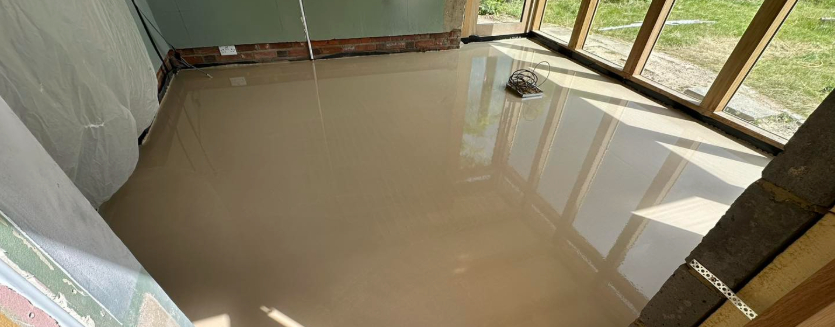
Anyone who’s laid screed knows the waiting game can be the toughest part. You’re ready to move on to the next phase, but that screed needs to be dry before you can get going. Meanwhile, other trades may be waiting to start work. So, the question becomes – heaters or dehumidifiers, or both? Which will get the job done most effectively and efficiently?
It’s not always a simple choice; however Buxton Flow Screeds has been working with floor screed for over two decades now, and we can certainly offer guidance. In this guide we look at how dehumidifiers and heaters can speed up the process separately and together. We also offer some tips on the perfect drying conditions for screed flooring.
Dehumidifiers – Powerful Help For Screed Drying
Dehumidifiers work by removing moisture from the air, which creates a drier environment and aids faster screed drying.
Dehumidifiers are particularly effective if you have an enclosed or well-insulated space. In such cases they significantly speed up the drying process by removing moisture rather than leaving it lingering in the air.
If you’re working in a large or unsealed area, the dehumidifier can still help with moisture removal, but you’ll need to consider the size of the space and choose a dehumidifier with sufficient capacity. It’s also important, even if you can’t seal the area completely, to do anything you can to minimise the air coming into the space.
Heaters – Adding Heat to the Screed Drying Process
Heaters can help with speeding up screed drying, but it’s important to understand what they do, and how they can be used. Unlike dehumidifiers, which remove moisture, heaters add heat to the environment. This increased heat speeds up the evaporation process by drawing more moisture out of the screed.
Heaters need to be used with dehumidifiers, therefore, especially if you’re working in a well-sealed or insulated space.
Here’s how it works:
- The heater raises the temperature, encouraging more moisture to evaporate from the screed.
- At the same time, the dehumidifier removes that moisture from the air. This combination creates an ideal drying environment.
If the moisture that evaporates from the screed has nowhere to go, it will stay in the air, probably leading to condensation and slowing down the drying process. If you don’t have a dehumidifier, the next best solution is to ensure that the space is well-ventilated, to remove the moisture from the air.
Things to Consider When Using Heaters:
- Temperature Control – Avoid very high temperatures, as these can cause the screed to dry too quickly and crack. Gentle, consistent heat is what you need.
- Air Circulation – Good air circulation distributes the heat evenly and stops certain areas from heating more than others.
- Safety – Check out the manufacturer’s safety guidelines when using heaters.
Creating the Ideal Screed Drying Environment
Achieving the best screed drying results can certainly be helped along by using heaters and dehumidifiers, but you need to get the dry environment right to achieve even drying.
Here are some tips – hope they’re helpful:
- Temperature – Keep the temperature consistent. Aim for a moderate temperature between 18-25°C (64-77°F). Fluctuations either side of this can cause cracking, or prolonged drying periods.
- Ventilation – Proper ventilation helps remove moisture from the air and stops condensation from forming. Even if you’re using a dehumidifier, some level of ventilation is still beneficial but avoid strong draughts directly on the screed, as this can also lead to uneven drying.
- Humidity Control – Drying depends on maintaining consistent humidity levels. This is where dehumidifiers play a vital role, as they actively remove moisture from the air. Monitor the humidity levels in your space and adjust your drying strategy accordingly.
- Airflow: -Good airflow helps distribute heat and encourages even drying. Fans can be used to improve air circulation but avoid pointing them directly at the screed.
Force Drying with Underfloor Heating:
If your project includes underfloor heating, you have the option of force drying the screed. This involves using the underfloor heating system to gently raise the screed temperature and speed up the drying process.
Take care to follow the manufacturer’s instructions carefully to avoid damaging the screed or the heating system. Force drying should always be done in a controlled way, gradually increasing the temperature over several days.
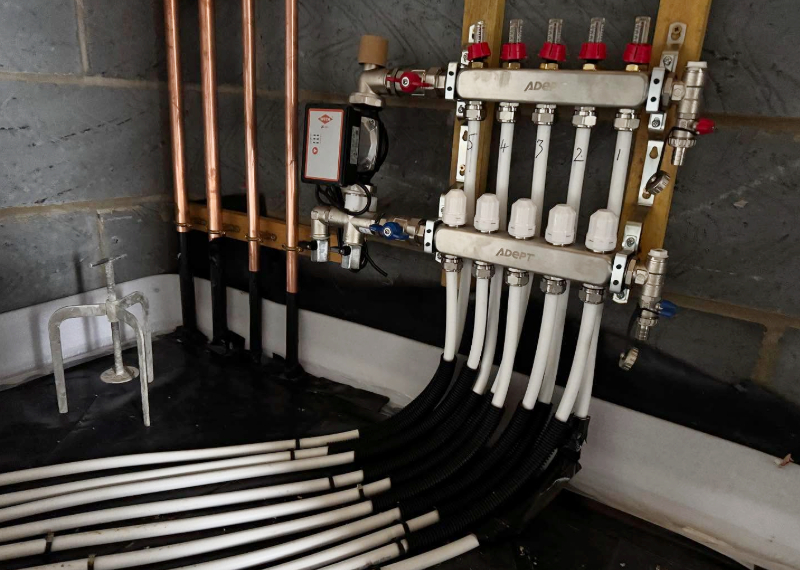
You should always combine force drying with dehumidification to remove the evaporated moisture from the air. This combined approach can significantly reduce drying times while avoiding the risk of cracking or shrinkage.
Need reliable liquid screed supply and installation? Buxton Flow Screeds offers comprehensive solutions for your project needs. Get a quote today – 020 3369 3396/ 07590 625100


