
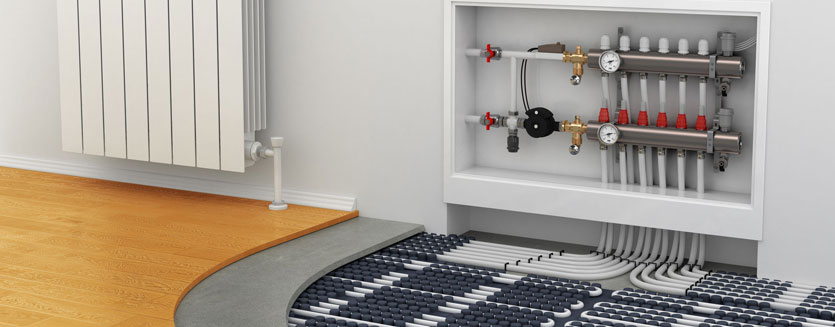
Laying Underfloor Heating Under Laminate
Getting the Perfect Screed Base for Laminate Flooring and UFH
Laminate’s a popular finish for homes wanting the look of wood flooring, without the maintenance that goes along with it. Plus, it looks great, is relatively affordable, and lasts a good long while.
Screeders, though, have a different perspective, especially when you’re laying underfloor heating under laminate. A poorly laid screed can lead to all sorts of problems such as uneven floors, clicking sounds, poor heat transfer, or cracked laminate. So, how do you it right, first time?”
The team at Buxton Flow Screeds has been installing screed and underfloor heating systems for over two decades. We know the possibilities and the pitfalls of working with laminate over UFH, so we’re going to take you through the steps you need to take to achieve a perfect install.
The Benefits of Installing UFH Under Laminate
Here’s why, from a screeder’s perspective, laminate can be a better choice than wood flooring:
1. Superior Stability
As an organic material, wood expands and contracts with changes in temperature and humidity. This constant shifting can lead to gaps, cupping or cracking. Laminate, on the other hand, is engineered for stability. Its core is typically made of high-density fibreboard (HDF), which is much less susceptible to fluctuations.
2. Better Heat Transfer Efficiency
With underfloor heating, you want warmth to radiate efficiently throughout the room. Laminate, being thinner than most solid wood flooring, allows for faster and more effective heat transfer.
3. More Budget-Friendly
Laminate is generally more affordable than solid wood, both in terms of the material itself and the installation. And that doesn’t mean sacrificing looks. Modern laminate comes in a huge range of styles, everything from oak and walnut to exotic hardwoods – and it’s often hard to tell the difference!
4. Easier Installation
Most laminate flooring now uses click-lock systems, making installation significantly easier and faster than traditional wood floors.
5. Greater Moisture Resistance
No flooring is completely waterproof, but laminate offers better moisture resistance than solid wood. We always advise clients to use a moisture-resistant laminate in kitchens and bathrooms, and to clean up spills quickly.
Laying Underfloor Heating Under Laminate – A Step-by-Step Guide
Here’s our tried-and-tested process for laying a screed that’s ready for laminate and UFH:”
1. Subfloor Assessment and Preparation
Before we even think about mixing screed, we need a solid foundation, free from dust and debris. This means a thorough check of the subfloor. We’re checking that it’s structurally sound, that it’s level, and free from cracks.
2. UFH System Installation and Pressure Testing
This is where the UFH pipework is carefully laid out according to the manufacturer’s design. It’s securely fixed to stop movement during the screeding process. The system needs to be pressure tested before any screed goes down. We’re looking for any leaks before they become a major problem hidden under the screed. Record the pressure and keep it under pressure while you’re laying the screed.
3. Screed Mixing and Application
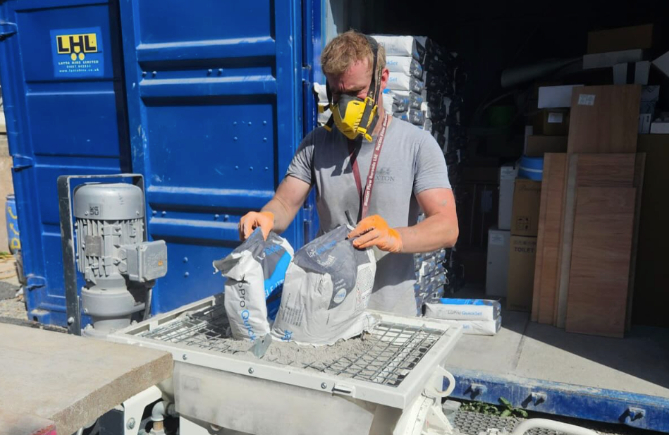
We recommend using liquid screed for underfloor heating. This is poured or pumped over the UFH pipes, ensuring you get an even coverage and the correct depth. Liquid screed can be relied upon to encase the pipes, leaving no air voids which can create uneven heating.
4. Curing and Drying
This is where many problems arise – rushing the drying process. Screed needs time to cure and release its moisture slowly. We protect the screed from drafts and direct sunlight to prevent rapid drying, which can lead to cracking. Liquid screed drying time depends on the screed type, thickness, and environmental conditions.
We never lay laminate until the screed has reached the required moisture content. You’ll need to check this with a hygrometer. An anhydrite screed should have a moisture reading below 0.5% by mass (CM) or 75% relative humidity. If excess moisture is found, you should leave it and re-test until the correct moisture level is reached.
5. Final Surface Preparation
Just before the laminate goes down, it’s important to remove dust, debris and laitance.
UFH and Laminate – Some General Guidelines
Now, here are some tips to ensure everything works together well:
- The Gentle Warm-Up – The first time you turn your UFH on, increase the temperature gradually. We recommend raising the flow temperature by no more than 5°C per day until you reach the operating temperature you want. Cranking up the heat to sharply can cause the laminate to buckle.
- The Temperature Zone – We generally advise keeping the surface temperature of the floor below 27°C. This prevents overheating, which can damage the laminate and lead to excessive expansion and contraction.
- Thickness Matters – When choosing your laminate, pay attention to its thickness. For optimal heat transfer, we generally recommend a maximum thickness of 18mm. Thicker laminates can act as insulators, reducing the efficiency of your UFH system.”
- Expansion Gaps – Laminate will expand and contract slightly with changes in temperature and humidity. That’s why we suggest leaving an expansion gap of around 10-15mm around the perimeter of the room.
So, there you have it – a screeder’s-eye view of getting the perfect foundation for laminate and underfloor heating. It’s a process that demands precision, experience, and an understanding of the materials involved.
If you’re planning a UFH installation under laminate want the peace of mind that comes with expert installation, get in touch with Buxton Flow Screeds today. We’ll provide a free, no-obligation quote and discuss what you need. Call us on 020 3369 3396/ 07590 625 100


