
Water Underfloor Heating
Water vs Electric Underfloor Heating – Which is Right For You?
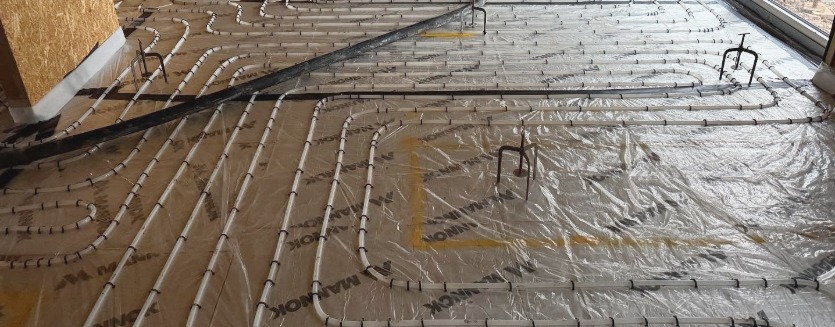
Thinking that underfloor heating is the right choice for your home? Then you’re most probably making a decision between water underfloor heating and dry, or electric heating. The ‘wet’ system works by circulating warm water through a network of pipes laid beneath your floor. It differs from ‘dry’ electric systems, which use mats of wires to generate heat. A wet system essentially turns your floor into a large, efficient, and wonderfully warm radiator.
As specialists in both flow screeds (used in installation) and water underfloor heating for over two decades, Buxton Flow Screeds understands UFH inside out. Our guidance comes from years of hands-on experience installing underfloor heating systems across the UK. So, you can trust our advice to help you make the best choice for a warm, comfortable, and efficient home.
Water vs Electric UFH – Answering Your Questions
When you’re weighing your options, you need clear, informative answers. As installers, we get asked the same questions all the time. We’ll go through them one by one to give you a better picture of which system fits your home and budget.
1. What kind of heat do they produce?
A water system provides a gentle, ambient warmth that heats the entire room evenly. It’s a radiant heat that feels incredibly comfortable and natural. An electric system is more focused on providing direct heat to the floor surface, so it feels warm under your feet very quickly but is less effective at heating the whole room volume efficiently.
2. Where should I use each system?
For whole-house heating, new builds, or large extensions, a water system is the better choice for efficiency and comfort. It’s designed to be a primary heat source. An electric system is a great problem-solver for a single, existing room where you want to add warmth without major disruption, like a tiled bathroom or kitchen floor.
3. How do the costs compare?
The initial budget for a water system is higher. This covers the pipework, manifolds, and the screed installation. However, the long-term running costs are far lower, offering a real return on investment. Electric systems are more affordable to install, but their day-to-day running costs are considerably higher, making them less economical as a primary heat source for a large area.
4. What does installation involve?
A water system installation is more structural. It needs careful planning, integration with your plumbing, and will raise the finished floor height. It’s a job for a professional team. An electric system is a low-profile alternative that’s easier to retrofit. While the mats are simple to lay, the system must be signed off by a qualified electrician to meet regulations.
5. Can I retrofit wet underfloor heating in an older property without raising the floor level significantly?
Yes, thanks to low-profile systems. Traditionally, water underfloor heating required a deep layer of screed, which could raise the floor by several inches – a real problem in older homes with lower ceilings. Now, though, we can use specialist slimline panels. These are pre-grooved boards where the heating pipes sit flush inside. This means the total height increase can be as little as 15mm, making it the ideal solution for renovation projects.
How Long Does a Wet Underfloor Heating Installation Take?
This is a really important question. The hands-on work to install wet underfloor heating is very quick, but the full process involves crucial waiting times (explained below). You’ll need to factor this into your project schedule. Here’s a typical timeline for an average ground floor project.

- Day 1-2 – Laying the System: Our engineers will fit the insulation, lay the network of heating pipes, and install the manifold (the control hub for your UFH). Before moving on, we carry out a pressure test on the pipes to guarantee the system is watertight.
- Day 3 – Pouring the Screed: Once the pipes are tested, the liquid screed is poured. This part is very fast – often just a few hours to cover the entire area, leaving a perfect, level surface that fully encases the pipes for excellent heat transfer.
- Day 4 & Beyond – The Drying Phase – This is the longest part of the process. The screed needs to cure naturally. You can usually walk on it after 24-48 hours, but it must be left to dry thoroughly before any floor coverings can be laid. We allow one day per millimetre of screed depth (e.g., 50 days for 50mm of screed). Rushing this stage is a big mistake as it can damage your final flooring.
- Final Step – Commissioning: Once the screed is fully dry and your chosen flooring is installed, the heating system is gradually brought up to its operating temperature.
Your UFH System – Perfectly Installed
The success of a water underfloor heating system comes down to two things – the quality of the system and the expertise of the installation team. By combining top quality materials with over two decades of hands-on experience in both heating and screeding, Buxton Flow Screeds can guarantee that your system is flawless from the first pipe to the final finish.
Ready to plan your perfect heating system?
We’re here to help you get it right. Contact us today to discuss the details of your upcoming project and see how we can bring comfortable, efficient heating to your home – 020 3369 3396/07590 625100


