

Tiling Over Underfloor Heating
Achieving a Perfect Finish – Tiling on Underfloor Heating Systems
Underfloor heating (UFH) continues to grow in popularity for UK homeowners, offering luxurious radiant warmth and a dust-free environment which is ideal for allergy sufferers. As demand increases for this type of heating grows, though, so does the need for accurate and reliable information information on floor finishes, such as tiling over underfloor heating.
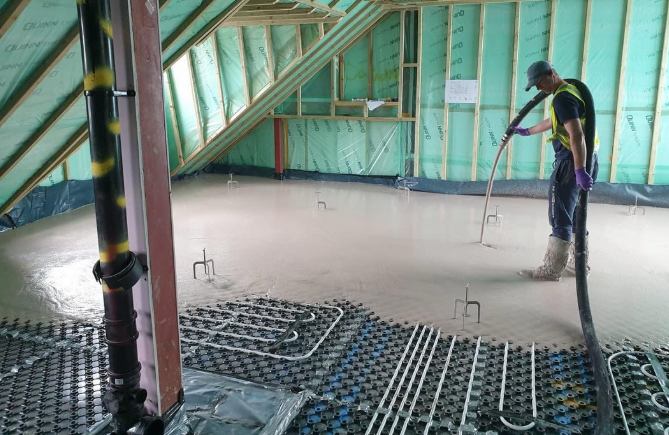
Most underfloor heating installations use a thermally conductive screed, which allows rapid heat transfer at lower temperatures for maximum heat and energy savings. In this guide Buxton Flow Screed provides information about liquid screed drying times in preparation for tiling over underfloor heating.
How Long Does Liquid Screed Take to Dry?
Buxton Flow Screeds is a long-established supplier and installer of liquid screed which is known for its rapid drying time. While traditional sand and cement screeds can take up to a week or more to be dry enough to walk on, liquid screed is typically dry enough for light foot traffic within 24-48 hours.
Liquid screed can be force-dried after just 7 days without compromising its strength or causing significant shrinkage. This accelerated drying process allows for quicker installation of floor coverings, including tiles.
However, several factors can influence liquid screed drying times:
- Temperature and Humidity – The ideal temperature at which to dry screed is between 15°C and 20°C (59°F and 68°F). Higher temperatures and lower humidity levels can cause screed to dry too quickly. On the other hand, cold and damp conditions will extend the drying period.
- Screed Thickness – Thicker screed layers will naturally take longer to dry than thinner layers.
- Ventilation – Ventilation is required for drying screed. Opening windows and doors or using mechanical ventilation is necessary to the process.
- Subfloor Conditions – The condition of the subfloor can also affect drying times. If the subfloor is damp, it will restrict the drying process of the screed.
Making sure the screed is sufficiently dry before tiling prevents issues like adhesive failure and tile cracking. We recommend conducting moisture tests before tiling to get the best results.
Drying Times for Screed with Underfloor Heating
Combining underfloor heating (UFH) with a tiled flooring finish is a popular choice, but it’s really important to know exactly how to get the drying process right. If you rush this stage it can lead to cracked tiles or adhesive failure. So, how long should you wait before tiling?
When laying tiles over UFH, we recommend a minimum drying time of 21 days for the screed. This allows for complete moisture evaporation, which will preventing issues further down the line. Remember, factors like temperature, humidity, screed thickness, ventilation, and the condition of the subfloor all play a role in drying time.
You can speed up the drying process by commissioning the UFH system. After the initial 7 days, Start with a temperature of around 20-25°C (68-77°F), and then increase it by a few degrees each day, making sure the screed surface stays below 27°C (81°F). This gentle heating helps draw out moisture without causing cracks.
Before laying tiles, carry out moisture testing. You’ll need a moisture meter for this. For calcium sulphate screeds, aim for below 0.5% CM, or whatever your tile adhesive manufacturer recommends. This simple step can save you a lot of hassle down the line and provide a solid foundation for your tiling.
Common Mistakes to Avoid When Tiling Over Underfloor Heating
It’s easy to make mistakes that can lead to costly repairs. Here are some common pitfalls to watch out for:
- Inadequate Subfloor Preparation – A clean, and level subfloor is essential for a successful screeding. Make sure the subfloor is free from dust, debris, grease, and any other contaminants. Any existing unevenness should be addressed before the screed is laid. A poorly prepared subfloor can lead to screed cracking, uneven drying, and ultimately, tile failure.
- Rushing the Drying Process – This is the biggest mistake. Don’t be tempted to start tiling before the recommended 21 days (or longer, depending on conditions) have passed. Impatience now can lead to big problems later.
- Ignoring Moisture Testing – Invest in a reliable moisture meter and check the screed’s moisture content against the tile adhesive manufacturer’s specifications.
- Incorrect UFH Commissioning – Starting the UFH at full blast too soon can cause the screed to dry too quickly and crack. Follow the gradual heating process we described earlier.
- Using the Wrong Adhesive – Not all tile adhesives are suitable for use with UFH. Choose a flexible adhesive that’s designed for underfloor heating systems. This type of adhesive is flexible enough to manage the slight movements caused by temperature fluctuations.
Expert Screeding for Underfloor Heated Floors
At Buxton Flow Screeds, our experienced UFH screeders carefully manage every stage of the screeding process. From our initial site evaluation to the final quality checks, we make ongoing adjustments in order to be able to guarantee a flawless finish ready for tiling.
Ready to create the perfect foundation for your tiled floor and underfloor heating system? Contact Buxton Flow Screeds today for a free consultation and expert advice – 020 3369 3396 / 07590 625100


