
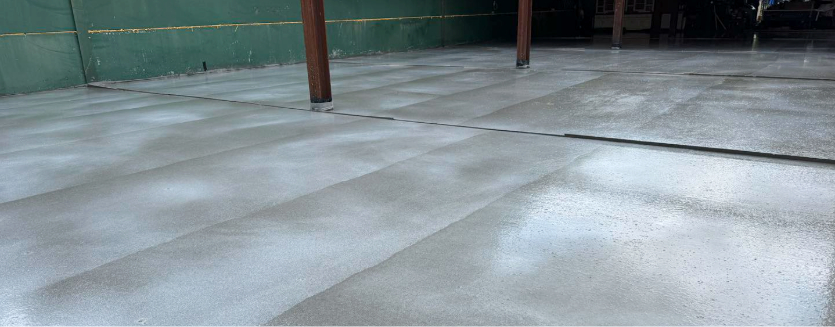
How to Stop Self-Levelling Screed from Cracking
Why Does Flow Screed Crack and How Can You Prevent It?
When you pour flow screed to lay a floor, you’re managing a complex chemical reaction. That liquid, self-levelling finish comes from its unique composition, but it makes it sensitive, too. A crack is simply the screed telling you that something – could be the subfloor preparation, or the room’s temperature, or a draft from an open door—has caused it stress as it cured. Understanding these stresses is how to stop self-levelling screed from cracking.
Which is where we can help. At Buxton Flow Screeds, we’ve spent the past two decades supplying and installing liquid screeds across the UK. Over that time, we’ve seen every screeding issue and perfected our methods to avoid them. In this blog we’re passing on the clear, practical information you need to achieve a crack-free screed finish.
Want a Perfect Floor? It All Starts Here
Want a crack-free floor? Then you need to know what causes them. Avoid the following mistakes, and you’re on your way to a perfect finish.
The most common mistake is rushing the subfloor prep. People see a structurally sound floor and assume it’s ready to go. But even a fine layer of plaster dust can ruin the job. Why? Because the screed floats on top of it instead of bonding. As it cures, it’s like a sheet of ice shrinking on a lake – with no anchor, it just cracks apart. So, you want to create a surface that will bond. First, prep your floor by vacuuming until it’s spotless, then applying the right primer for your subfloor.

The second mistake is not trusting the science on the bag. Think of every bag of flow screed as a carefully engineered product. The manufacturer’s instructions aren’t just a guide – they are the formula for a precise chemical reaction. The instruction to add a specific amount of water is critical. The temptation to add more for a looser mix is a false economy. All that extra water upsets the formula, weakening the final structure and causing shrinkage as it evaporates. That strain is what leads directly to cracks.
Don’t Get Caught Out – 4 More Common Cracking Traps
While the subfloor prep and mixing are fundamental, there are still a number of ways screed can catch you out. Here are four more things that can lead to cracks in an otherwise perfect installation.
- No Room for Movement – Don’t be tempted to pour screed right up to the walls, the reason being that as the screed cures and then responds to heat changes in the room, it needs to move. Screed poured flush to a wall is trapped. This pressure will eventually cause stress fractures to appear, often right across the middle of the floor. There’s a simple fix for this – always install a foam expansion perimeter strip first.
- Rushing the Underfloor Heating – It may seem like a good idea to help the drying process by turning on the UFH, but doing it too early is a very bad idea. Force-drying flow screed with UFH will cause it to shrink far too quickly and unevenly, guaranteeing a cracked, failed floor. Wait at least 7 days before gradually commissioning the heating, increasing the temperature by only a few degrees per day.
- Skimping on the Depth – Trying to save on your budget by making less go further doesn’t work with self-levelling screed. If it’s poured below its minimum required depth (typically 40mm) it will be weak because it lacks the mass to remain stable as it cures and will easily crack or curl. Take care to measure your area and depth and always order exactly what’s required.
- A Windy, Sunny Room – Leaving windows open or letting strong sunlight hit the new screed will dry the surface fast while the screed below remains wet. This tension between the quick-drying top layer and the wet bottom layer will pull the surface apart, causing crazing. Always keep the room where your screed is curing sealed and shaded for the first 72 hours. If you have a tight deadline, use a rapid-drying screed.
Ready to Pour? Let’s Talk
Attention to detail is everything with a screed floor. A crack-free floor doesn’t happen by accident – it’s the result of painstaking prep and an attentive process. If you’re ready to get started, we can supply you with the highest quality materials to do the job. If you want a team of screeders that does this stuff every day, our full end-to-end installation service ensures a perfect result, every time.
Get in touch with Buxton Flow Screeds to ask about materials, get advice on your pour or to get a quote for your flawless floor. Call us today on 020 3369 3396/07590 625100 or fill out our contact form.


