
Flow Screed London
The Premium Choice for London Floors – Liquid Screeding Solutions
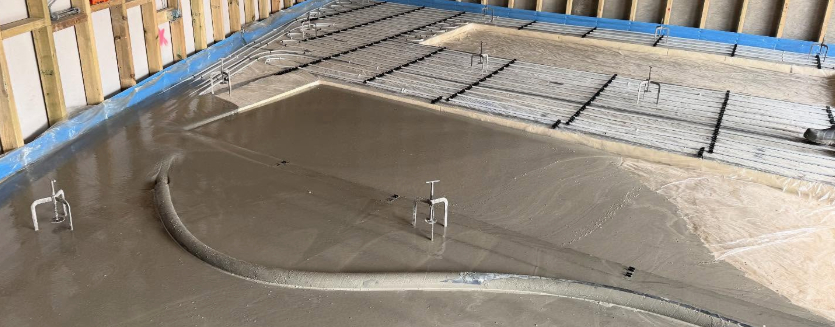
If you’re renovating, building, or simply getting on with a DIY project in London, you’ll most likely know the term ‘flow screed’. But what is it? Flow screed – also called liquid screed, self-levelling screed, or anhydrite screed – is a type of screed that’s poured in liquid form.
Because of its fluidity, it creates a perfectly smooth, level surface, ideal for underfloor heating. It’s quickly become the preferred option for flooring, now dominating over 80% of the screed market, and for a good reason. It’s quicker to install, dries faster, and is stronger.
Buxton Flow Screeds has been supplying and installing flow screed in London for two decades now. We’ve seen, again and again, the ease and speed of installation, and the superb surface it creates in preparation for your flooring finish. In this blog, we explain what it is, what it does and how it streamlines your London project.
What’s Special About Flow Screed?
The fundamental difference between flow screed and traditional screed starts with the “binder.” In traditional screed, the binder is Portland cement. This is what holds the sand and aggregate together. Flow screeds use a different binder – calcium sulphate (also known as anhydrite).

Here’s Why Calcium Sulphate Makes The Difference:
- It’s Finer – The calcium sulphate particles are much, much finer than cement particles. This is what allows the screed to flow so easily and to self-level. It also means the particles pack together much more tightly.
- It Reacts Differently with Water – When cement mixes with water, it forms crystals that interlock and harden. Calcium sulphate does something similar, but the crystals are needle-like, and they form a much denser, more interwoven structure. This is what gives flow screed its strength and reduced shrinkage.
- Less Water Needed – Because of the efficient way calcium sulphate reacts, flow screeds use less water than traditional screeds. Less water means faster drying times, and it also reduces the risk of shrinkage and cracking.
- Lower Alkalinity – Calcium sulphate screeds have a lower pH (they’re less alkaline) than cement-based screeds. This makes them more compatible with certain types of adhesives and floor coverings, giving you more flexibility in your flooring choices.
The Role of Additives (The Supporting Cast)
Flow screeds aren’t just calcium sulphate and water. They also contain additives which are essential for the overall performance.
- Superplasticisers – These provide the “flow” part of flow screed. Plasticisers reduce the surface tension of the water, making the mixture incredibly fluid, even with less water.
- Retarders – These control the setting time of the screed. They’re needed to allow sufficient time to pour and level the screed before it starts to harden.
- Stabilisers – These help to prevent the heavier particles (like sand) from settling to the bottom of the mix during transport and pouring. This ensures a consistent, thoroughly mixed screed.
It’s All About the Microstructure
The performance of flow screed comes down to its microstructure which creates a screed that is:
- Denser – Fewer air voids, meaning greater strength and better thermal conductivity.
- Stronger – The interlocking crystal structure provides higher compressive and flexural strength.
- More Stable – Less shrinkage and cracking due to the lower water content and the way the crystals form.
- More Fluid – The superplasticisers allow for easy pouring and self-levelling.
Flow Screed in London – Solving Real-World Challenges
Why is flow screed/liquid screed a good choice for projects in London? It’s not just about having a smooth, flawless floor – it’s also about helping out with the very real challenges that builders, renovators, and homeowners face every day.
How Flow Screed Makes Your Life Easier
London is a unique environment. Space is at a premium, time is money, and regulations are tight. Flow screed tackles these head-on:
1. Space Saving and Headroom:
Victorian terraces, conversions, and even many modern apartments in London often have limited ceiling height. Traditional screeds can eat into that precious space.
We can lay flow screed at significantly thinner depths than traditional sand and cement. This can gain you valuable centimetres of headroom, making a real difference to the feel of a room, especially in basements or loft conversions.
2. Underfloor Heating in Tight Spaces:
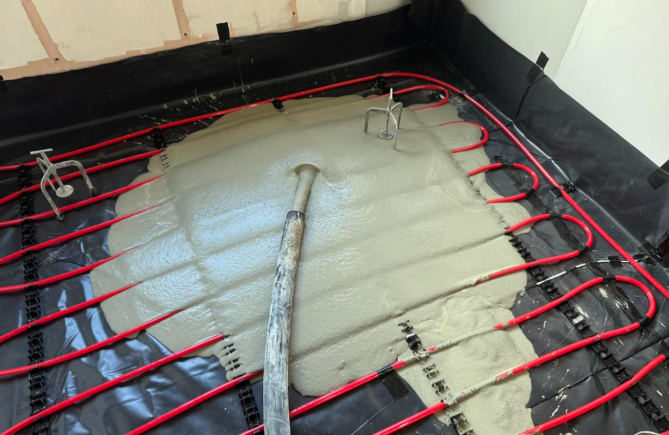
Retrofitting underfloor heating in older London properties can be a nightmare. Raising floor levels significantly isn’t always an option.
Because it’s thinner and conducts heat so efficiently, flow screed is perfect for UFH, even in tight spaces. You get the warmth and comfort without sacrificing headroom. Plus, you’ll likely see lower energy bills due to the improved efficiency.
3. Fast Turnaround for Tight Schedules:
London projects are often on tight deadlines. Delays cost money, and disruption needs to be minimised. The rapid installation and drying times of flow screed come into their own. We can often pour a floor in a single day, and it’s walkable within 24-48 hours. This means less downtime for your project, less disruption for neighbours, and a quicker path to completion.
4. Access and Logistics:
Getting materials to site in London can be a logistical headache. Narrow streets, parking restrictions, and limited access are common issues. We use pumping equipment to deliver the screed directly to the floor, even in hard-to-reach areas. This eliminates the need for hauling heavy bags of cement and sand through the property.
5. Weight Considerations in Older Buildings:
Older buildings may have restrictions in terms of the load that the original structure will take Because liquid screed requires less depth, it is lighter than traditional screed.
It’s About More Than Just a Floor – It’s About a Smoother Project
In essence, choosing flow screed in London isn’t just about the floor itself. It’s about choosing a solution that streamlines your entire project, and helps you to deliver exceptional results, on time and to budget. It’s about making the building process work in a city that often throws challenges your way.
Working With Buxton Flow Screeds
Whether you’re extending a Victorian terrace, converting a basement, or building your new home, Buxton Flow Screeds can help you achieve the perfect flooring, quickly and efficiently. We care about delivering exceptional results and making the process as smooth and efficient as possible.
Our friendly team is here to answer your questions, offer expert advice, and provide a service you can rely on. Get your free, no obligation quote today – call us on 020 3369 3396/07590 625100 or use our contact form.


